By Doanan Phan, on May 24th, 2013
Guest Blog Post By: Claire Wagner
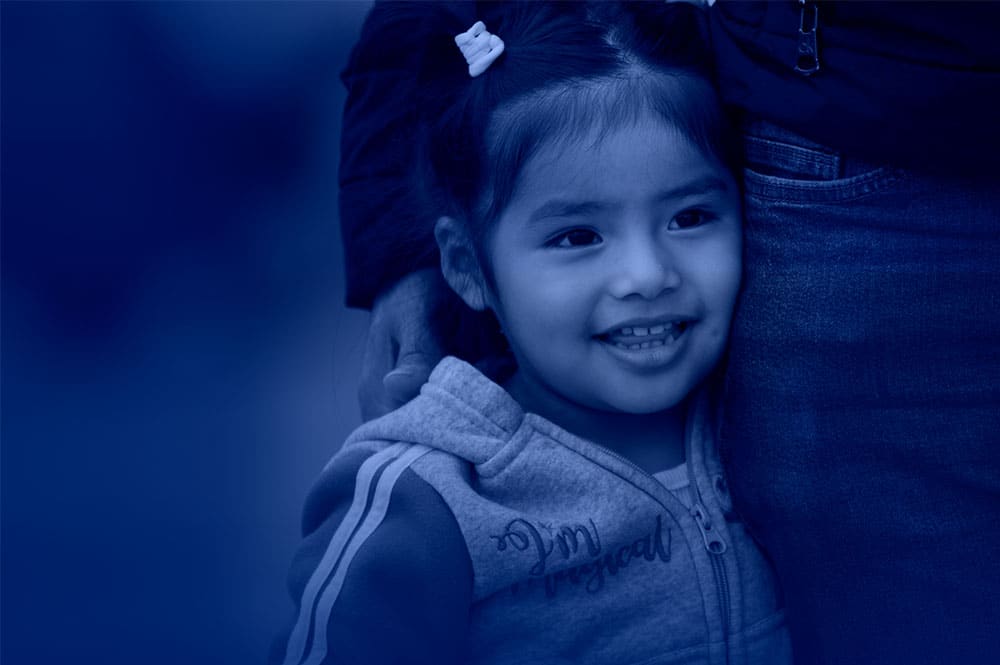
No child should go hungry in any community. There’s too much at stake! Childhood hunger has both short and long-term consequences. It prevents children and communities from reaching their full potential. It’s a pervasive problem that threatens our future.
Childhood hunger is an emotional development problem
- Hungry children suffer from feelings of anxiety, depression, and low self-esteem
- Hungry children don’t have the energy to dream about tomorrow
Childhood hunger is a health problem
- Hungry children are sick more often and more likely to go to the hospital
- Hungry children are more likely to be overweight than children who get three meals a day
Childhood hunger is an education problem
- Hunger in children under 3 years old severely harms their lifelong ability to learn
- Hungry children do poorly in school because they can’t concentrate and are not well prepared for class
Childhood hunger is a workforce and job-readiness problem
- Adults who experienced hunger as children are not as well prepared for today’s work environment
- Hunger can place a lifelong toll on their mental, emotional, physical, and social well-being (Pediatrics, Vol. 110 No. 4 October 1, 2002)
We know where the hungry kids are and we know how to feed them. We are not only providing food through our partner agency network, but also launching intensive outreach to connect local children and their families to healthy meals through CalFresh, a program funded by the USDA to help improve the health and nutrition of families with low incomes.
The urgency is NOW – more than 35% of the school children in our two counties receive free or reduced-price school meals that will stop very soon. We need your help to connect 100,000 children with healthy meals. You can make a donation online at www.SHFB.org/ShareYourLunch and learn other ways to help, too.
We also want to acknowledge the sponsors of our STOP Childhood Hunger campaign, who share our vision of ensuring that any child in Santa Clara or San Mateo County who needs a meal can get one. Thank you for your generous support!

By Doanan Phan, on May 15th, 2013
Guest Blog Post By: Claire Wagner
May is CalFresh Awareness Month. CalFresh (food stamps) is an important part of the solution to our community’s hunger crisis and a necessary safety net for low-income individuals and families struggling during tough times. The benefits also generate $1.79 in economic activity for every $1 of CalFresh money spent in our region through the support of local businesses.
CalFesh is the number one source of nutritious and affordable food for hungry families in our area. The program issues monthly electronic benefits that make it easy for people in need to make healthy choices because it can be used to buy most foods at many markets and food stores.

Unfortunately, only about half of those who are eligible receive CalFresh. That means thousands of families and individuals in our area are needlessly going hungry. In fact, according to the USDA, California ranks last among all states for participation in the federally run Supplemental Nutrition Assistance Program (SNAP) of which CalFresh is a part. In Santa Clara and San Mateo Counties, only about one-half of the people who are eligible are actually enrolled in CalFresh.
Tracey was one of those people who qualified but did not know how to access CalFresh. A divorced mother of two teen boys who both need intensive special education services, her only income is alimony and child support. It had been just enough to make ends meet until it was reduced from $1,500 to $800 per month. Because her rent is $700 per month, there was almost nothing left over to pay for food.
“I’ve done everything I can to find a job and nothing has come along. I’m at the end of my rope,” Tracey told us when she called the Food Connection Hotline. Tracey had a history of volunteering at pantries and other non-profit organizations and she was embarrassed to ask for help for herself. Our staff re-assured her that anybody can experience unexpected turns in life and that sadly, she is not alone. We provided her with a referral to the Produce Mobile and Family Harvest sites in Sunnyvale and then screened her for CalFresh. She and her boys are eligible for $526 per month in CalFresh benefits, and the family no longer has to worry about being hungry.
CalFresh enrollment is critical to our mission to end hunger in Silicon Valley. In addition to performing CalFresh screenings over the phone, we have an extensive outreach program that identifies eligible people and helps them apply. We hope that some day all qualified families can access CalFresh benefits and purchase the food they need to stay healthy. To learn more about the program, go to http://www.shfb.org/calfresh.
By Doanan Phan, on May 8th, 2013
Guest Blog Post By: Claire Wagner
In honor of Mother’s Day this Sunday, we wanted to share Rewaida’s story with you. Unfortunately, it is not uncommon that when a family’s financial resources run very low, parents will skip meals in order to put food on the table for their children. Rewaida, a mother of three, is one of those adults who had to make that difficult choice until she began receiving food through Second Harvest.
“My name is Rewaida and I’m a 30 year-old, stay-at-home Mom who’s been married for 11 years. My husband, who worked in restaurant management, is the center of my life and we’ve been blessed with three wonderful children: Mohammed, Yusif and Deena.
Life was good and we were happy until the day our world fell apart. I learned that my husband was seriously ill. We went to several different doctors, but couldn’t get the answers we needed. Finally, we learned that he had a mass in his lung and it was cancerous. We were devastated and didn’t know what to do or how to tell our children.
My husband was able to continue working full-time for most of the year, but his declining health meant that he eventually could only work two or three days a week. For the first time in our lives, we faced one serious challenge after another. We were running out of money, didn’t know where to turn and were too proud to ask for help.
As parents, we believe our main responsibility is to provide for our kids. I’m grateful that we had a habit of putting a little money away each week because we’ve been living off our savings, which are running low. We realized that we no longer have enough left to put food on the table or pay the rent. That was when I developed a new habit – I began to skip meals so that my children could have more to eat.
I knew we hit bottom when I opened the refrigerator door one day and it was empty. I remember crying that night as I wondered how I would feed my family the next day. That’s when I learned about Second Harvest Food Bank’s Family Harvest program at my kid’s school. Since that time, my refrigerator went from being empty to completely full.
Because of the generous people of this community, my refrigerator is full most of the time and I can eat my meals with the rest of my family. Without the Food Bank, we wouldn’t have been able to survive during this incredibly challenging time. Thank you from the bottom of my heart!”
Though they struggled throughout the year, Rewaida was especially worried about the summer because her children would no longer receive free meals at school. We launched our STOP Childhood Hunger campaign for her and the thousands of other parents in Santa Clara and San Mateo Counties who need to replace these meals during June, July, and August.
Help local families stop worrying about where their next meal is coming from by donating online at www.SHFB.org/ShareYourLunch. You can also find out how to donate food or host a drive. And we urge you to take a few moments to watch our latest video, where you can hear Rewaida’s sons and other kids talk about experiencing hunger:
Our Latest Video: STOP Childhood Hunger: Share Your Lunch This Summer
Please share the video and our campaign on Facebook, Twitter, YouTube, and Google+. We need everyone’s help to STOP Childhood Hunger. Thank you, and we you wish a very Happy Mother’s Day!
By Doanan Phan, on May 1st, 2013
Guest Blog Post By: Claire Wagner
If you’ve never experienced real hunger, Mohammed explains it in our newest video: “I know how it feels to be hungry. It feels like you’re about to faint.”
STOP Childhood Hunger: Share Your Lunch This Summer
One in three students in Santa Clara (36.5%) and San Mateo (38%) counties relies on free or reduced-price school meals. It’s nearly summer now, and the end of the school year means the end of the healthy, filling meals they have counted on.
Summer is the “season of childhood hunger.”
Teachers tell us about the panic kids experience when they’re not sure where their next meal is coming from. They will hoard food on Friday to make sure they have something for the weekend ahead. Imagine how much bigger their fear is when they’re faced with going all summer without enough to eat. As Mohammed told us, before his family came to Second Harvest, he didn’t usually eat lunch when he wasn’t in school.
However, we also know that sometimes kids eat because their parents skip meals to put food on the table for them. That is a terrible choice to make. It endangers the health of the adults and affects the well-being of everyone in the family.
No child or family should go hungry.
Through our Stop Childhood Hunger campaign, which begins today, we hope to ensure that any kid who needs a meal can get one. We know where the hungry kids are and how to feed them. And we know how to make each donation stretch as far as possible through our network of partner agencies. Children are 40% of the people we serve.
In addition, we’re launching a more intensive outreach to connect children and their families to healthy meals through CalFresh, a federal program that helps improve the health and nutrition of low-income families. CalFresh can also stretch food dollars so that families can buy more fruit, vegetables, whole grains, lean protein, and other healthy foods.
But we still need to feed 100,000 children this summer.
The urgency is NOW. Please make a donation online at www.SHFB.org/ShareYourLunch to connect children with the healthy meals they need TODAY and all year long. In addition to your gift, here are other ways you can help:
- Host a drive. We will create an online page reflecting your total donations and number of children fed.
- Donate food items from the “most-needed” list on our website. (We have a child-friendly food list.)
- Share our video with your family and friends so they can learn more about childhood hunger, too.
- Tell us why you care about ending childhood hunger by adding a comment on this blog post, sharing and commenting on our Facebook page, and tweeting about our campaign using the hashtag #SHFBFeedsKids. (Follow us at @2ndHarvest.)
If we all come together, we can make childhood hunger a thing of the past. Thank you!
By Doanan Phan, on April 24th, 2013
Special Blog Post By: Claire Wagner
Our amazing volunteers donate time that is equivalent to the work of 143 full-time staff, valued at $5.9 million. This week, we’d like to introduce you to Nancy, who first started volunteering with Second Harvest in 1992. Nancy recalls that when she came to California, she struggled financially as a single mother of a toddler. During this difficult time, she always knew that the Food Bank would be there if she needed it. And later, she decided to volunteer because she wanted others to take comfort in that knowledge, too.
Nancy is a Senior Operations Manager at Applied Materials, which is the Title Sponsor of the Silicon Valley Turkey Trot. Last year, the event had more than 24,000 participants and raised $750,000 for three local nonprofits, including Second Harvest Food Bank. Nancy has helped to organize the Turkey Trot for the past seven years. “I’m always in awe of how many people come out on Thanksgiving morning. I especially love the younger volunteers who are so excited to be there even though they’re getting up at the wee hours of the morning!”
In fact, Nancy believes that every parent should volunteer and encourage their children to do the same. Each year when Nancy was ready to make her own Thanksgiving food donations to Second Harvest, she asked her son to pick out the turkeys and canned goods. Then they drove to the Food Bank to make the delivery so he could better understand the impact they were having. She believes the experience of giving to others has helped shape her son’s character and guided him to a lifetime of service to others.
Nancy says that volunteering is a “rush” for her, probably not unlike the feeling that keeps runners hooked on racing. “It helps me feel like I made a real difference. And I believe the ripple effect caused by giving has an impact on your family, your friends, and the community as a whole.”
Thank you, Nancy, for helping to make sure Second Harvest can continue to help those in need of food. Would you like to fight hunger, too? We have many volunteer opportunities each week. Learn more at www.SHFB.org/Volunteer.
By Doanan Phan, on April 19th, 2013
Special Blog Post By: Claire Wagner
April is National Volunteer Month and we’re celebrating the dedication of our own volunteers, whose efforts are equivalent to the work of 143 full-time staff — valued at $5.9 million! This week, we’d like to introduce you to Randy, a proud Second Harvest volunteer for nearly a decade. As a food sort team leader, he provides training, guidance, and other logistics to dozens of other volunteers at our Bing Center in San Carlos.
Randy is also a champion for Second Harvest in the community. He regularly recruits members of his Kiwanis Club and other groups to participate at Second Harvest. In addition, he serves as a Food Bank Ambassador through the Speaker’s Bureau, representing us at dozens of engagements each year. His appearances have helped generate significant donations of food, money, and time while alleviating the demands on our staff.
Randy even uses his hobby, photography, to help Second Harvest by taking high-quality photos at special events. As he sees it, saving the costs of photographers means more money can be spent on feeding hungry people.
Randy likes to talk about how working with the food bank not only benefits the community but also the volunteers themselves. “Volunteers are fundamental to every step of the food banking process. Our collective efforts mean that more food can get into every neighborhood, to the people who need it most. But the ‘ROI’ doesn’t stop there.”
“My personal growth, well-being, and connection to our community is reciprocated every time I help sort bins of carrots, speak at a corporate fair, or inspire someone else to take on the cause of ending hunger.”
Thank you, Randy, for showing up to help others in so many important ways! Would you like to fight hunger, too? We have many volunteer opportunities each week. Learn more at www.shfb.org/volunteer.
By Doanan Phan, on April 16th, 2013
Save the date for this year’s “Stamp Out Hunger” food drive, hosted by your letter carriers on Saturday, May 11! This marks the 21st anniversary of this nationwide food drive, where you can donate food to help local families in need. Helping out is as easy as 1-2-3.
1) Fill a bag with items from our non-perishable most-needed foods list. Here’s a shopping list you can use:
- Meals in a can (stew, chili, soup)
- Tuna and canned meat
- Peanut butter
- Canned foods with pop-top lids
- Low-sugar cereals
- 100% fruit juices in single serving boxes
- Canned fruit packed in juice
- Canned vegetables (low salt)
Please avoid donating items packaged in glass.
2) Leave the bag by your mailbox on Saturday morning on May 11, by 9 am.
3) Your letter carrier will take care of delivering the bags to Second Harvest.
Join us in the largest single-day food drive benefiting Second Harvest Food Bank and other food banks around the country. We look forward to sharing the results with you in May! Thank you for your support!
By Doanan Phan, on April 11th, 2013
Special Blog Post By: Claire Wagner
Food banks from across the country, including Second Harvest, have nominated programs to Feeding America and Walmart that focus on childhood hunger. The public has the opportunity to vote for their favorites on Facebook and the 40 food banks that receive the most number of votes will each receive a $45,000 grant. You decide who gets the money. Now’s the time to think local!
We need this grant to fund the Kids NOW (Nutrition on Weekends) Program, which meets the needs of hungry children and families by providing them with free, nutritious, and easy-to-prepare food to take home on weekends and over school vacations when other resources such as free or reduced-cost school lunches are not available. Children receive an assortment of 8-10 healthy food items every week including fresh fruit, granola bars, cereal, pasta, and soup to take home in their backpacks.
One in three children in our area depends on free or reduced-cost school lunches. The end of the week or the school year often creates panic among kids and their families about the possibility of not having enough to eat. Kids NOW not only eases their fears, it helps improve the eating habits of the whole family by offering healthy food choices and educational messages about nutrition.
Help us win the grant and fund Kids NOW by voting every day in April at www.shfb.org/Vote. This is a special Facebook page set up for Kids NOW. Anyone 18 or older with a Facebook account can vote once every day through April 30, 2013. We also encourage you to share with your friends and family. Just go to the special Facebook page at this link and click SHARE. https://www.facebook.com/2ndharvest/app_599788450050788
Thank you for voting! We’ll be sure to share the results with you when the contest is over.
 
By Michelle Berg, on March 19th, 2013
Please Join Us
Restaurant 3000
Managed by So Delicious
3000 Sand Hill Road, Menlo Park

For
The 7 Biggest Mistakes Trustees Often Make
Tuesday, April 2, 2013
4:30-7:30 PM
This complimentary educational seminar is entertaining and informative. Enjoy delicious food while guest speaker and noted wealth strategist Sandeep Varma explores real case examples to determine where clients, trustees and successor trustees went wrong and demonstrate the difference that proper planning can make.
Please RSVP to Lily Wong by March 28 at (408) 266-8866 ext. 259 or lwong@shfb.org.
This workshop is sponsored by Restaurant 3000, managed by So Delicious.
By Michelle Berg, on January 15th, 2013
When many of us think of hunger, we tend to think of starving children with protruding stomachs living in third-world countries. In the U.S., the images of hunger that come to mind are often homeless adults standing on street corners with cardboard signs.
The reality is quite different. The hungriest people in our community may not be sickly thin, but actually tipping the scales. Hunger, obesity and malnutrition are intricately connected in the United States.
Low income families not only struggle to earn enough money to put food on the table, but many low income neighborhoods don’t even have full-service grocery stores where healthy food options are available – these areas are often referred to as “food deserts.” Instead families often shop for groceries at corner convenience stores or resort to eating at inexpensive fast food restaurants.
Fast food restaurants are not only prevalent in impoverished areas, but fast food is an inexpensive way to feed a family while also making sure that no-one is left “feeling hungry.”
“When you’re hungry and struggling financially, you’re going to get what you can afford and fills you up,” said Eddie, a Second Harvest Food Bank client. “It’s hard when you work long hours and sometimes feel like the deck is stacked against you.”
One example of this ironic co-existence between hunger and obesity is in Mississippi, the state with both the highest hunger rate (19%) and the highest obesity rate (35%).*
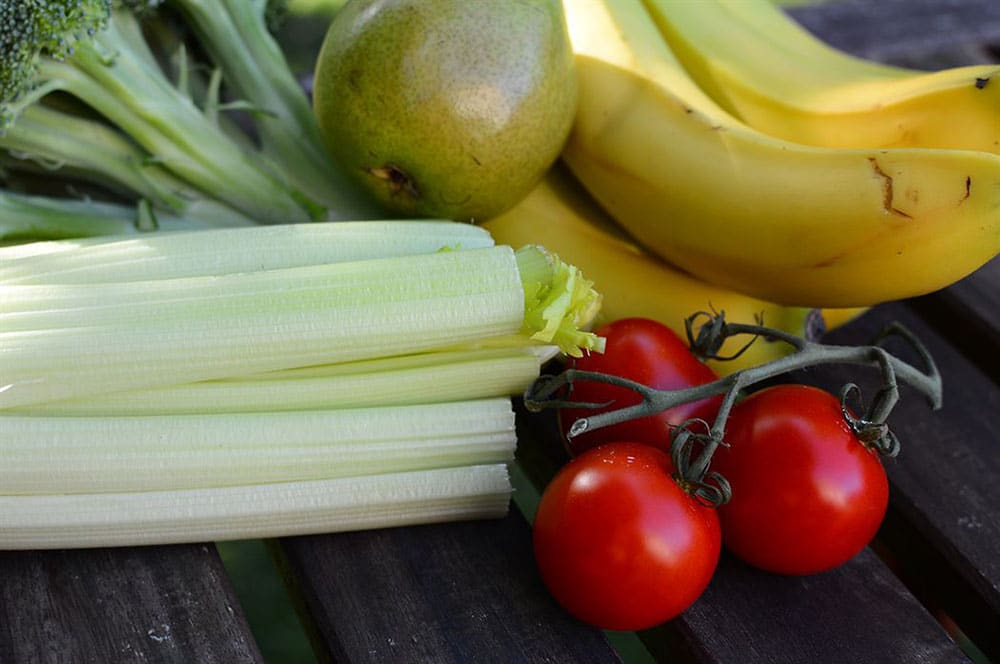
At Second Harvest our first priority is to feed hungry people in our community. However we also don’t want to compound the diet related health issues that many of our clients face. Therefore we have gone out of our way to prioritize the distribution of healthy foods such as fresh fruits and vegetables. Fresh produce is viewed as an unaffordable luxury by our most financially strapped neighbors. We are proud to report, that last year more than half of what the Food Bank provided was fresh fruits and vegetables.
Senior Director of Programs and Services, Cindy McCown, was the first Nutritionist to ever work for a food bank. She was hired on at Second Harvest nearly 30 years ago. “The link between hunger and obesity is subtle,” she says. Under her leadership, Second Harvest helps by distributing healthy foods to low-income households while our Nutritionists educate our clients about healthy eating, providing them with simple recipe cards so that they can learn how to prepare some of the new foods they are trying for the first time.
* Feeding America Fact Sheet, “Food Insecurity, Health and Diet-Related Disease.” (2012)
|
|

Second Harvest Food Bank of Santa Clara and San Mateo Counties is the trusted leader dedicated to ending local hunger.
Since its inception in 1974, Second Harvest has become one of the largest food banks in the nation, providing food to an average of nearly one quarter of a million people each month. The Food Bank mobilizes individuals, companies, and community partners to connect people to the nutritious food they need. Nearly half of the food distributed is fresh produce. Second Harvest also plays a leading role in promoting federal nutrition programs and educating families on how to make healthier food choices.
Stay tuned here for the latest news — efforts to end local hunger, stories from the front lines, advocacy alerts, and promotions benefiting the Food Bank.
We have distribution warehouses in San Jose and San Carlos, CA. Get Directions
Visit our main website at:
www.SHFB.org

|